Taylor vs. Martin: Which Acoustic Guitar Is Better?
Intermediate Guitar contains affiliate links and is a member of the Amazon Services LLC Associates Program. If you make a purchase using one of our links, I may receive compensation at no extra cost to you.
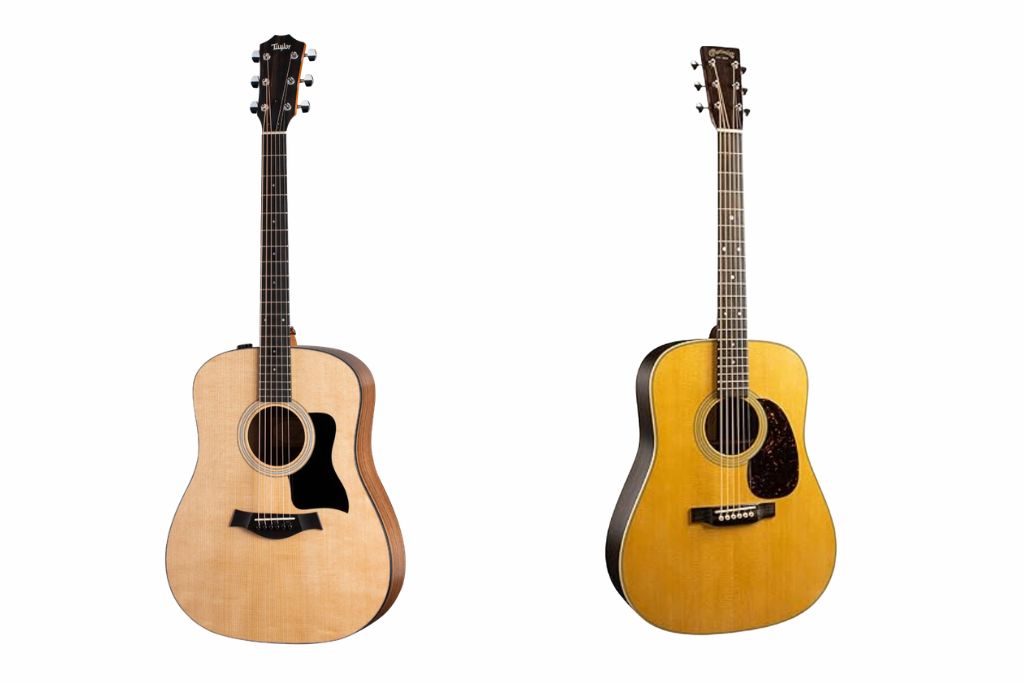
If you’re trying to decide between a Taylor and a Martin, you’ve already realized this is one of the most-debated questions in acoustic guitar. And almost nobody gives you a straight answer. Most folks say “both.” Some say “depends.”
A small, but loud minority insists you should buy a Gibson J-45 instead.
With the help of hundreds of guitarists, we’ve compiled this post to help you make the decision based on what you’re looking for.
Here’s the honest breakdown of what each guitar does well, what it doesn’t, and which one you should buy.
The short answer
If you want the warmest, fullest, most “this is what an acoustic guitar sounds like” tone, with deep bass and a sound that gets better the longer you own it, get a Martin.
If you want a guitar that plays effortlessly, has a brighter and more articulate voice, comes with a cutaway and great electronics, and feels easy in your hands from day one, get a Taylor.
If you can afford both, get both. That’s what most serious acoustic players end up doing anyway.
Now let’s get into why.
The Martin
Martin has been making guitars in Nazareth, Pennsylvania since 1833. That’s.. a LONG time.
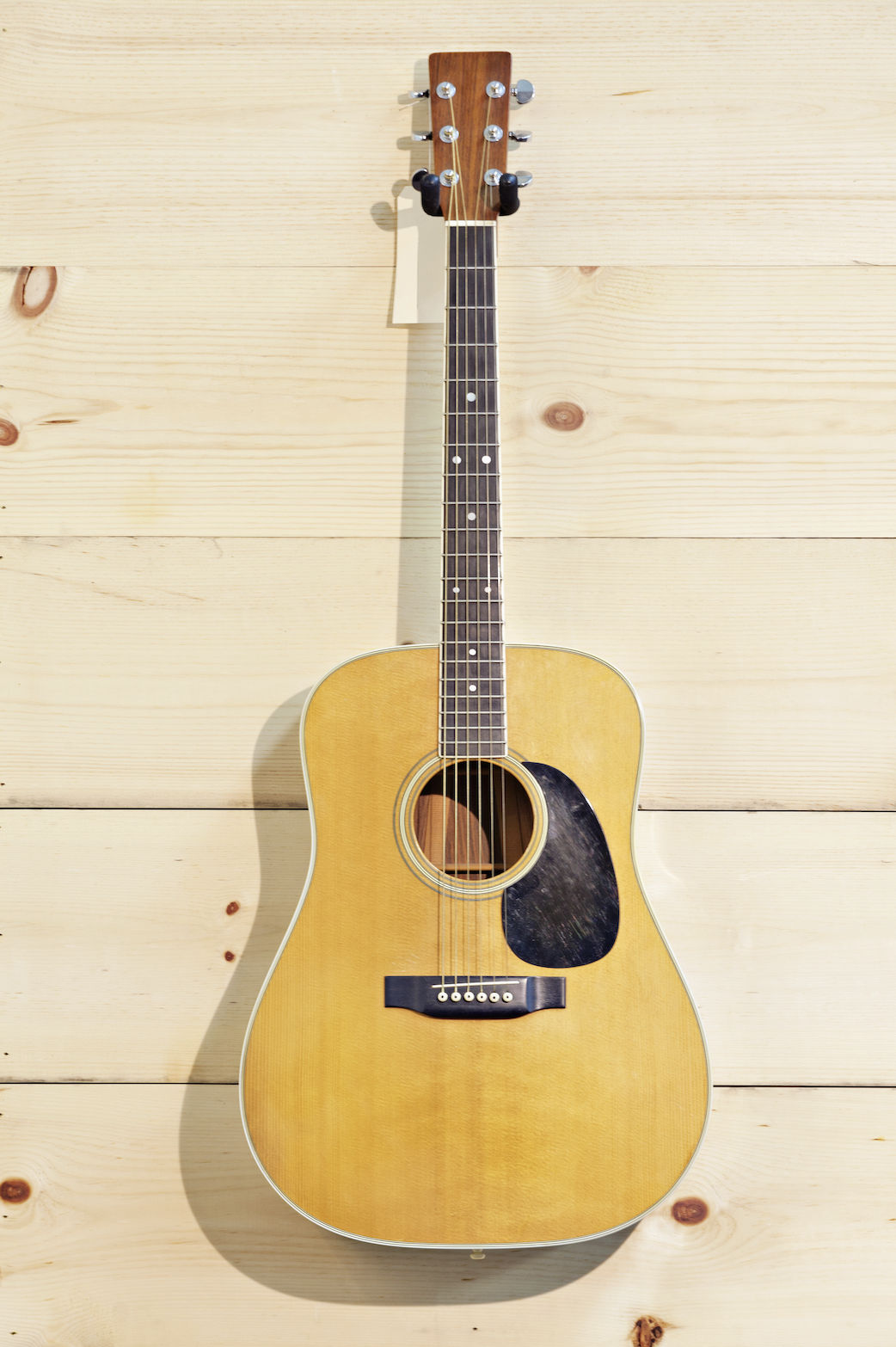
The D-28 dreadnought, introduced in 1931, is so iconic that essentially every other dreadnought ever built is a copy of it.

Martins are cannons. They’re big, warm, full-bodied, deep-bass cannons. They’re the kind of guitar that fills a living room and sounds better the longer you own it, because the wood opens up and gets richer over decades.
Ask a Martin owner about their guitar and you will not get a measured response. You will get a 15-minute lecture. He’s been playing since 1976. He started on a D-18. He just bought another D-18. He’s been to the factory three times. They were building one for Eric Clapton when he was there.
Martin pros
- Warmer, richer, fuller tone than basically anything else in this price range
- Bass response that fills a room without needing to be plugged in
- Gets better with age (a 30-year-old Martin sounds better than a brand new one)
- The D-28 is the reference standard every other dreadnought gets compared to
- Holds resale value better than almost any other production guitar
- Built by hand in Pennsylvania using methods that haven’t changed much in decades
Martin cons
- Chunkier neck that doesn’t fit smaller hands as well
- Action is usually higher out of the box and needs a setup
- Binding can come unglued, especially on newer models
- Headstocks are famously fragile (they break if the guitar tips over)
- Stock electronics are mediocre at best
- Quality control on newer guitars is inconsistent enough that even loyal Martin fans say you have to play a few before finding a good one
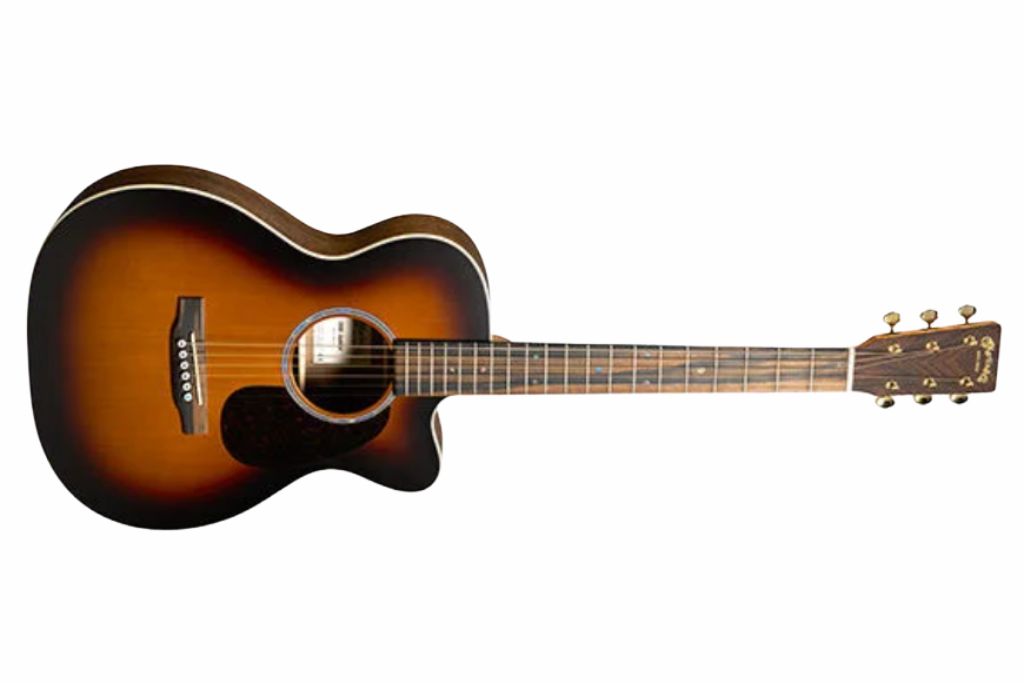
- Most models don’t have a cutaway
- More expensive than a comparable Taylor
Best for
Martins are best for fingerpicking, country, folk, bluegrass, singer-songwriter material, and any genre where deep acoustic warmth matters.
In these terms, think Hank Williams, Willie Nelson, Kurt Cobain (MTV Unplugged), John Mayer, Joni Mitchell, and Tony Rice.
The Taylor
Bob Taylor and Kurt Listug started Taylor Guitars in El Cajon, California in 1974. Compared to Martin’s 1833 founding, that makes Taylor the new kid. But they’ve used those 50+ years to build the most playable production acoustic guitars on the market.

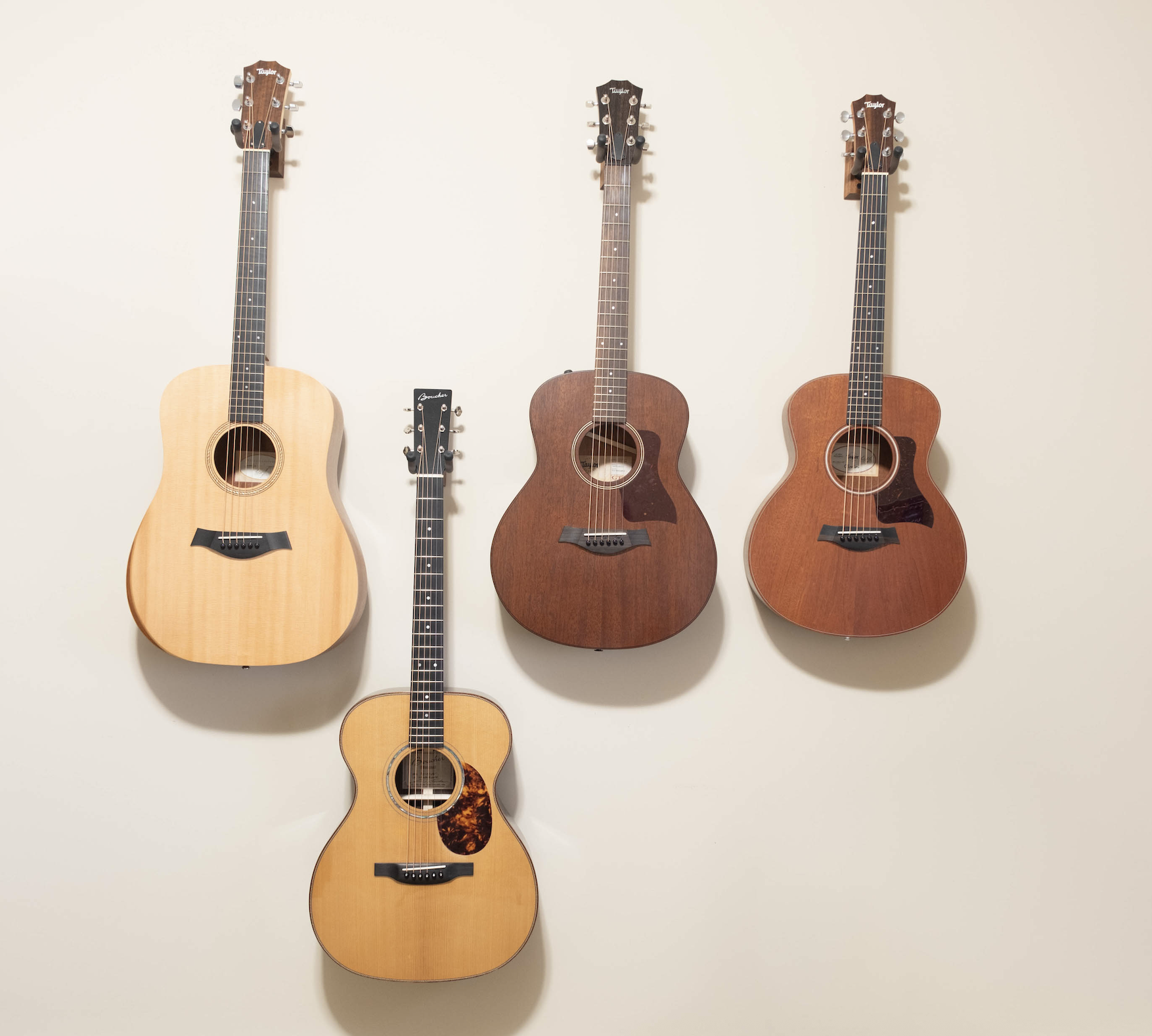
Taylors are bright, articulate, and they cut through a mix. The necks are slimmer, the action is lower, and the fit and finish is consistent across the whole lineup. Most models come with a cutaway so you can reach the upper frets.
And they play like butter right out of the case.
Taylor pros
- Slimmer, faster neck profile that suits smaller hands
- Most models come with a cutaway for upper-fret access
- Cuts through a band mix better than a Martin
- Fit and finish is consistent across the entire price range
- V-Class bracing (on newer models) improves intonation up the neck
- Quality control issues are rare
- Customer service is generally excellent
Taylor cons
- Brighter sound that some players hear as “thin” or “tinny”
- Doesn’t age into a richer tone the way a Martin does
- Less bass response and less room-filling presence
- The 200 series (their budget line) isn’t all-solid-wood and doesn’t sound as deep
- Switching from Fishman to in-house electronics divided a lot of fans
- Can feel “modern” or “polished” in a way that turns off traditionalists
- Newer in-house tuners aren’t as trusted as the Grovers they used to use

Best for
Taylors are best for live performance, modern singer-songwriter material, fingerstyle that needs clarity, recording where the guitar sits in a mix, and players who prioritize easy playability.
In these terms, think James Taylor, Taylor Swift, Jason Mraz, and Zac Brown.
When to pick the Martin
Buy a Martin if:
- You play mostly at home or in intimate acoustic settings
- You’re drawn to traditional folk, country, bluegrass, or fingerstyle
- You want a guitar that gets better the longer you own it
- You prioritize tone over playability
- You’d rather have one heirloom-quality guitar than three good ones
- The D-28 sound is what plays in your head when you imagine an acoustic
When to pick the Taylor
Buy a Taylor if:
- You gig regularly and need to plug in
- You play with other musicians and need to cut through a mix
- You have smaller hands or wrist issues
- You want a cutaway for upper-fret access
- You’re newer to acoustic and want something that plays easy from day one
- You value consistency and modern build quality
What about the wildcards?
The Taylor vs. Martin debate ignores some excellent alternatives. Here are our recommendations:
Gibson J-45 or Hummingbird.
The third American giant. It’s punchier midrange than a Martin, and more character than a Taylor. The J-45 is the dark horse pick in this whole debate and a lot of pros prefer it over both.

Takamine.
Half the price of either, especially for stage use. The electronics are legendary, and they hold up to gigging in ways higher-end acoustics sometimes don’t.

Collings.
If you have the budget, this is what serious Martin players upgrade to. Hand-built in Austin, Texas. Tone for days.
Alvarez Yairi.
The Japanese cult favorite. Players who own them swear they outclass Martins at twice the price.

Seagull, Larrivee, Eastman, Breedlove.
All make excellent acoustics in the same price range as a Taylor or Martin. Worth playing before you commit.

The honest answer
Go play them.
Don’t buy an acoustic from a YouTube review. Don’t buy one because some guy on a Facebook page told you to. Don’t buy one because Willie Nelson plays one or because it’s pretty.
Walk into a shop, sit down with a Martin and a Taylor in your lap, one after the other. Play the same chord progression on both. Notice which one makes you smile and which one feels like an extension of your body.
The guitar that’s right for you will tell you, you just have to be there to listen.
Most players eventually own one of each. A Martin for the couch, a Taylor for the gig. That’s the natural endpoint of this debate, and there’s no real winner along the way.
Just buy the one you can’t stop thinking about and buy the second one later.